ZLD Systems for
Fertilizer & Agro-Chemical Industry
Fertilizer and pesticide manufacturing plants generate high-ammonia, high-nitrogen effluent with corrosive acids, phosphates, and trace active chemical compounds. Rototech engineers ammonia stripping followed by forced circulation evaporation and ATFD drying — achieving ZLD for agro-chemical plants under CPCB Red Category norms.
Fertilizer & Agro-Chemical Effluent Challenges
High Ammonia / Nitrogen
Urea, ammonium nitrate, and NPK manufacturing effluent carries 1,000–10,000 mg/L ammonia-nitrogen. Without stripping pre-treatment, NH3 vapourises during evaporation and contaminates the condensate — making water recovery impossible without additional treatment.
Pesticide Residues & Toxicity
Technical-grade pesticide manufacturing generates effluent with trace active ingredients classified as hazardous under CPCB Red Category. Standard biological treatment cannot degrade these compounds — thermal concentration followed by secured incineration is mandatory.
Corrosive Acids & Fluoride
Phosphoric acid production generates fluorosilicic acid (H2SiF6) byproduct streams. Sulfuric acid from ammonium sulfate processes creates pH 1–2 streams. Standard SS304 evaporators fail in weeks — specialised MOC is non-negotiable.
Strip First. Evaporate Safe.
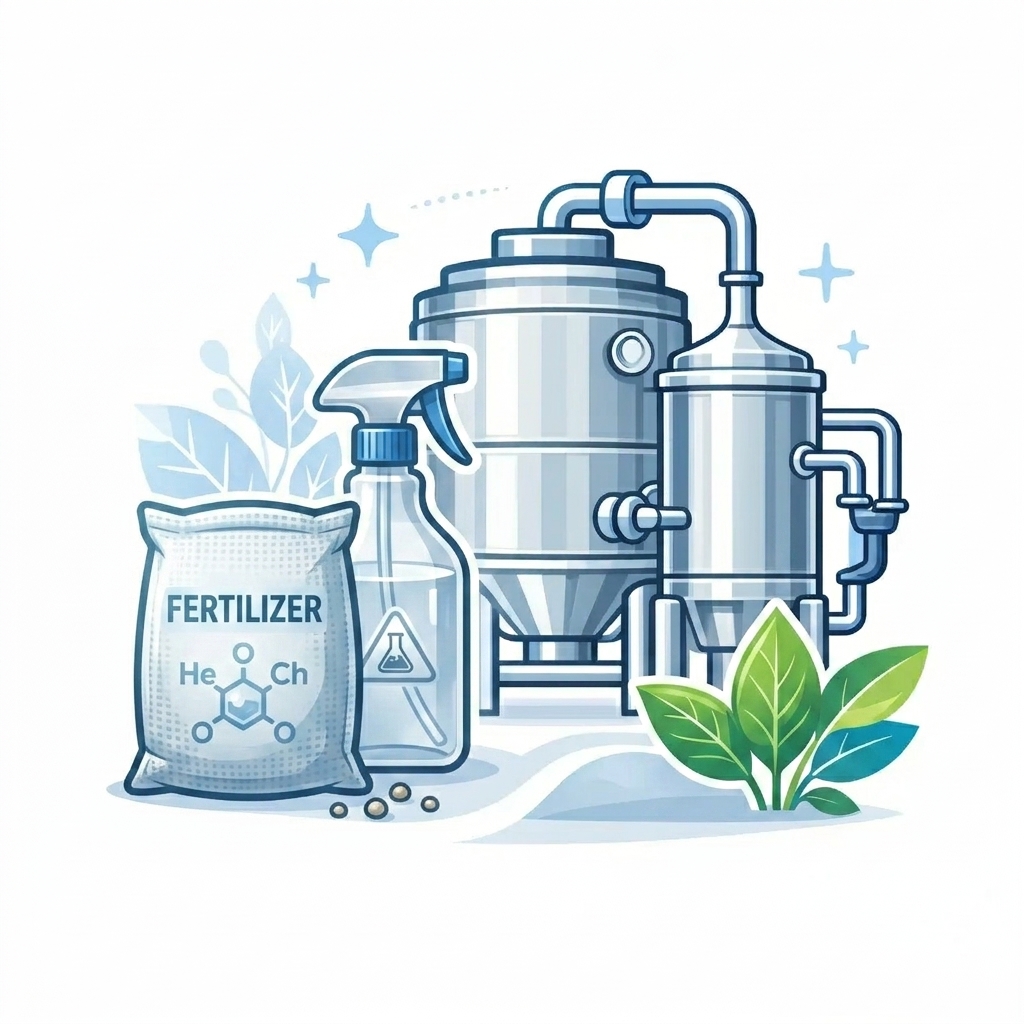
Rototech designs fertilizer ZLD systems that mandatorily strip ammonia and volatile organics before any evaporation — protecting condensate quality, preventing corrosion, and ensuring the recovered water meets reuse standards.
- Phase 1: Ammonia Stripper Column at pH 10–11 — removes 95–99% of NH3; stripped gas absorbed as ammonium sulfate or thermally destroyed.
- Phase 2: Solvent Stripping (if pesticide streams) — removes volatile organics before evaporator feed.
- Phase 3: Forced Circulation MVR or MEE in corrosion-resistant MOC (Hastelloy/FRP/rubber-lined) — 85–92% water recovery.
- Phase 4: ATFD dries concentrate to dry salt for secured landfill or incineration.
Core Technologies for Fertilizer & Pesticides:
Fertilizer ZLD Questions
Why must ammonia be stripped before fertilizer effluent evaporation?
Ammonia at 1,000–10,000 mg/L vapourises preferentially into steam during evaporation, contaminating condensate and making water recovery impossible without further treatment. Stripper Columns remove 95–99% of NH3 before evaporation — the stripped gas is absorbed as ammonium sulfate (saleable product) or thermally destroyed.
What MOC is used for fertilizer evaporators handling phosphoric acid or fluoride?
Phosphoric acid and fluoride streams require rubber-lined carbon steel, FRP, or Hastelloy C-276 depending on acid concentrations. Standard SS fails rapidly in these environments. Rototech evaluates MOC during the FEED stage based on actual stream compositions — not generic assumptions.
How is pesticide manufacturing effluent safely disposed via thermal treatment?
Solvent stripping first removes volatile pesticide compounds. Forced circulation MVR then concentrates the stripped effluent. The ATFD dries the concentrate to a solid — the only permissible disposal route for most pesticide residues is secured incineration at authorised facilities. Condensate is polished and reused internally.
ZLD for Your Fertilizer or Agro-Chemical Plant
Share your effluent streams — ammonia concentration, acid presence, volumes — and Rototech will engineer a compliant, corrosion-proof ZLD system.