ZLD Systems for
Tyre & Rubber Industry
Tyre and rubber manufacturing generates effluent containing zinc compounds, sulfur-based accelerators, carbon black particles, and latex — streams with multiple compliance challenges under CPCB Red Category regulations. Rototech engineers forced circulation MVR and MEE ZLD systems with latex pre-treatment and zinc control, achieving zero liquid discharge for tyre and rubber plants.
Tyre Industry Effluent Challenges
High Zinc Discharge
Zinc oxide from vulcanisation loads process water to 50–500 mg/L zinc — 10–100× the CPCB discharge limit. Zinc is acutely toxic to aquatic life. Without ZLD, tyre plants face consent violations, prosecution, and reputational damage with OEM customers.
Latex Fouling
Natural and synthetic latex in wastewater coagulates on heat transfer surfaces at elevated temperatures, rapidly reducing heat transfer coefficients and requiring frequent unplanned shutdowns for mechanical cleaning — a major operational problem in standard evaporators.
Sulfur & Accelerator Compounds
Rubber accelerators (CBS, MBTS, TMTD) and sulfate salts at 1,000–5,000 mg/L add complexity to evaporation chemistry. Some accelerator compounds are toxic and cannot be discharged even at low concentrations — thermal destruction in ATFD is the only compliant disposal route.
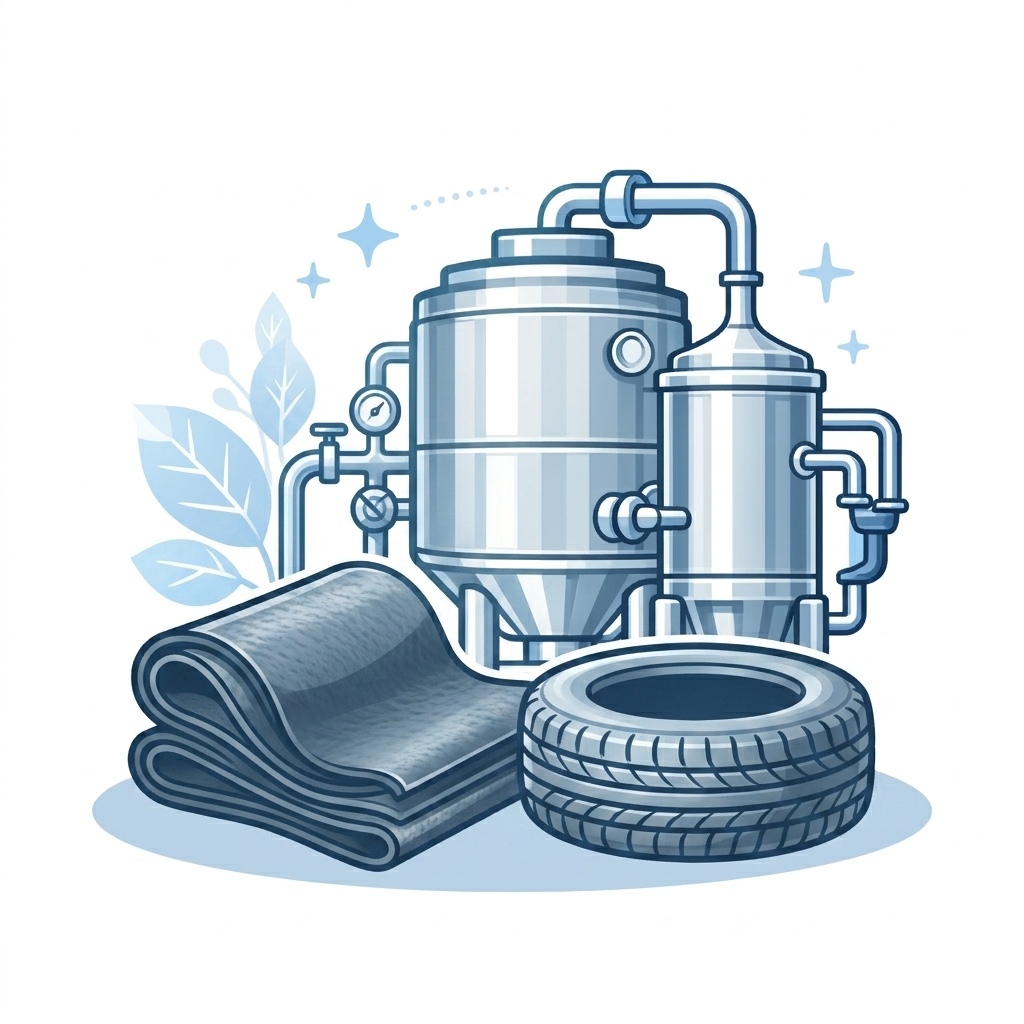
Zinc Control. Latex-Free Evaporation. ZLD.
Rototech's tyre ZLD system begins with latex coagulation and zinc precipitation to protect the evaporator from fouling, then uses a forced circulation MVR system configured for sulfate-rich streams with periodic CIP cleaning.
- Phase 1: Latex coagulation (acid or enzymatic) + sedimentation — removes rubber particles before evaporator feed.
- Phase 2: Zinc precipitation with lime/NaOH — reduces Zn below 5 mg/L; sludge dewatered for metal recovery.
- Phase 3: Forced Circulation MVR or MEE — handles sulfate-rich, moderate-TDS stream with anti-fouling provisions; 85–92% water recovery.
- Phase 4: ATFD dries the concentrate — thermal destruction of accelerator residues; dry salt cake for secured disposal.
Core Technologies for Tyre & Rubber:
Tyre Industry ZLD Questions
Why is zinc such a key concern in tyre plant effluent?
Zinc oxide is used as a vulcanisation activator at 3–5 phr, loading process water to 50–500 mg/L — 10–100× the CPCB discharge limit of 5 mg/L. Zinc is acutely toxic to aquatic organisms. Rototech precipitates zinc with lime/NaOH to below 5 mg/L before evaporation; sludge is dewatered and can go to zinc recovery processors.
How is latex wastewater handled in tyre plant ZLD?
Latex coagulates on heat transfer surfaces above 60°C, causing severe fouling. Rototech designs acid coagulation or enzymatic latex pre-treatment to break down rubber particles before the evaporator. The resulting clarified stream is then processed in a forced circulation evaporator configured for the resulting lower-fouling feed.
How are rubber accelerator residues disposed of through the ZLD system?
CBS, MBTS, TMTD, and other accelerators are toxic organic compounds that cannot be discharged. They concentrate in the evaporator residue and are thermally destroyed in the ATFD at elevated temperatures. The dry solid output goes to a CPCB-authorised secured hazardous waste landfill or incineration facility.
ZLD for Your Tyre or Rubber Manufacturing Plant
Share your process streams — latex type, zinc concentrations, daily volumes — and Rototech will engineer a compliant ZLD system with latex pre-treatment and zinc control.