Produced Water ZLD for
Oil & Gas Industry
Oil and gas operations produce highly saline produced water co-extracted with hydrocarbons, flare water, and process effluent with TDS up to 3,00,000 mg/L — brine more concentrated than seawater. Rototech engineers forced circulation MVR and MEE systems with oil removal pre-treatment that handle this extreme salinity, prevent hard scale formation, and achieve ZLD for offshore or onshore operations.
Oil & Gas Effluent Challenges
Hydrocarbon Contamination
Free and emulsified oil at 50–5,000 mg/L in produced water fouls heat transfer surfaces, creates fire risk in evaporator vapour spaces, and contaminates condensate. Oil reduction to <5 mg/L is mandatory before evaporator entry.
Extreme TDS & Hard Scale
Produced water TDS ranges 50,000–3,00,000 mg/L with barium sulfate, strontium sulfate, and calcium carbonate scaling — the hardest and most insoluble scale types known in industrial water treatment. Standard evaporators fail within days without specific anti-scaling design.
H2S & Corrosive Gases
Dissolved H2S at 1–500 mg/L causes hydrogen embrittlement and sulphide stress cracking in high-strength steels. H2S must be stripped before any evaporator, and MOC must be selected for sour service conditions (NACE MR0175 compliance).
Oil-Free. Scale-Resistant. Full ZLD.
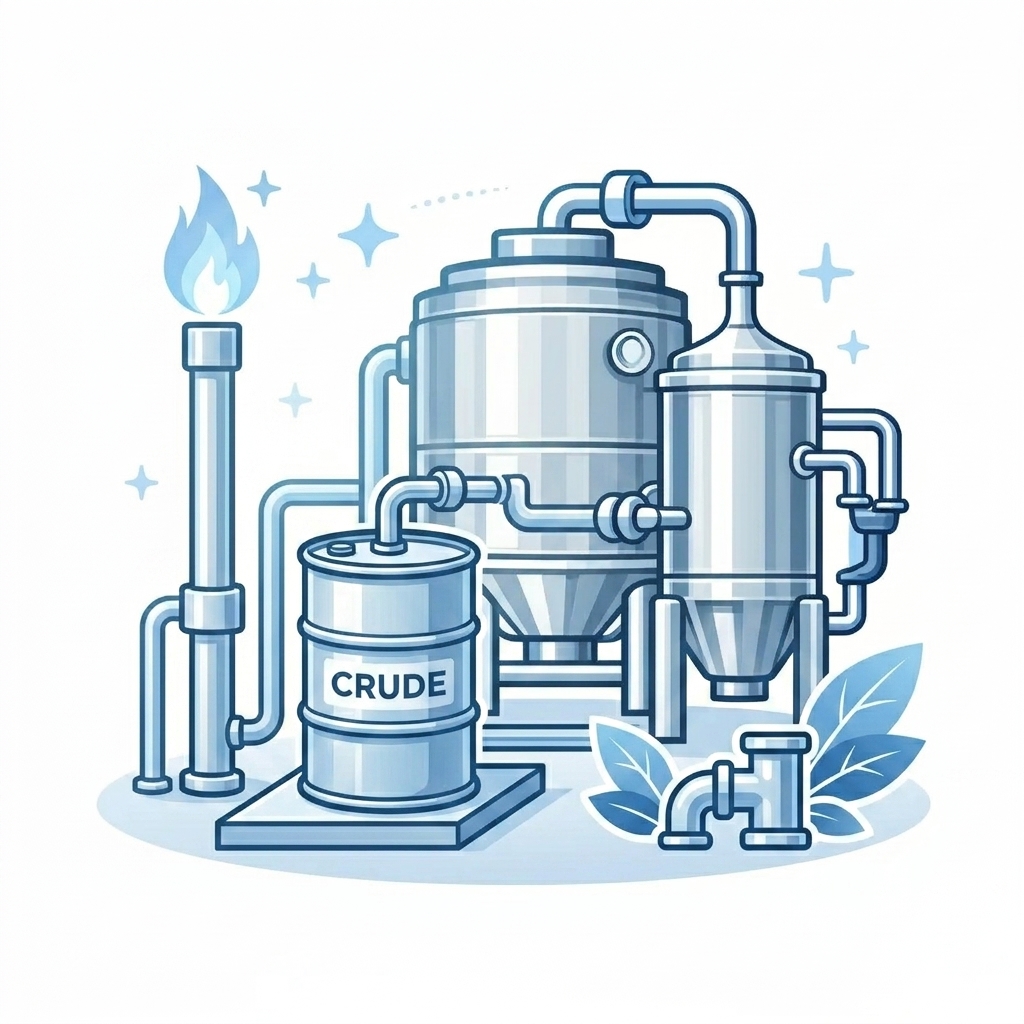
Rototech's produced water ZLD system starts with rigorous oil and gas removal to protect the evaporator, then uses forced circulation systems engineered for extreme TDS with anti-scaling programmes and NACE-compliant MOC throughout.
- Phase 1: IAF (induced air flotation) + coalescing separator — reduces oil to <5 mg/L; H2S stripping to <1 mg/L.
- Phase 2: Forced Circulation MVR or MEE — handles TDS up to 2,50,000 mg/L; NACE MR0175-compliant MOC; scale inhibitor programme for BaSO4/SrSO4.
- Phase 3: ATFD dries brine concentrate to dry mixed-salt cake (NaCl + CaSO4 + BaSO4) for disposal.
- Phase 4: Clean condensate reused as injection water, boiler feed, or utility water — closing the water loop.
Core Technologies for Oil & Gas:
Oil & Gas ZLD Questions
What pre-treatment is required before evaporating oil and gas produced water?
Free and emulsified hydrocarbons must be reduced below 5–10 mg/L before evaporator entry — oil causes severe fouling and fire risk. Rototech designs IAF + coalescing separators for oil removal. H2S must also be stripped below 1 mg/L to prevent corrosion and occupational hazard issues before the feed enters the evaporator.
How does Rototech handle extremely high TDS produced water (up to 300,000 mg/L)?
At these concentrations standard falling film evaporators scale immediately. Rototech uses forced circulation systems with high slurry velocity to prevent crystallisation on tube surfaces, combined with scale inhibitor programmes targeting calcium, barium, and strontium sulfate — the hardest scale types in produced water treatment.
Can barium or strontium sulfate scaling be managed in produced water evaporators?
BaSO4 and SrSO4 are almost insoluble in acid and extremely hard to remove once deposited. Rototech accounts for these in evaporator design by specifying scale inhibitor programmes, operating below the scaling saturation index, and designing forced circulation configurations that allow mechanical cleaning access without full system disassembly.
ZLD for Your Produced Water Challenge
Share your produced water TDS, hydrocarbon content, and daily volume. Rototech will engineer a sour-service compliant ZLD system for your operation.