ZLD Systems for
Pharmaceutical & API Industry
API synthesis and formulation plants generate complex, high-COD multi-solvent wastewater that requires robust solvent stripping, evaporation, and drying before safe disposal. Rototech designs ZLD systems specifically engineered for pharmaceutical effluent characteristics — CPCB Category A compliant.
Pharmaceutical Effluent Characteristics
High COD Loads
API synthesis generates complex organic loads of 20,000–2,00,000 mg/L COD. This far exceeds the capacity of biological treatment systems to degrade directly — thermal pre-treatment is mandatory.
Multiple Organic Solvents
Methanol, ethanol, acetone, IPA, DMF, DCM — each with different boiling points, miscibility, and regulatory status. Each requires specific stripping conditions before conventional evaporation can operate safely.
CPCB ZLD Mandate
Pharmaceutical units in Critically Polluted Areas face CPCB Schedule VI ZLD requirements — meaning absolutely zero liquid discharge. No partial compliance: 100% of effluent volume must be treated and recovered.
Solvent Recovery First. Then ZLD.
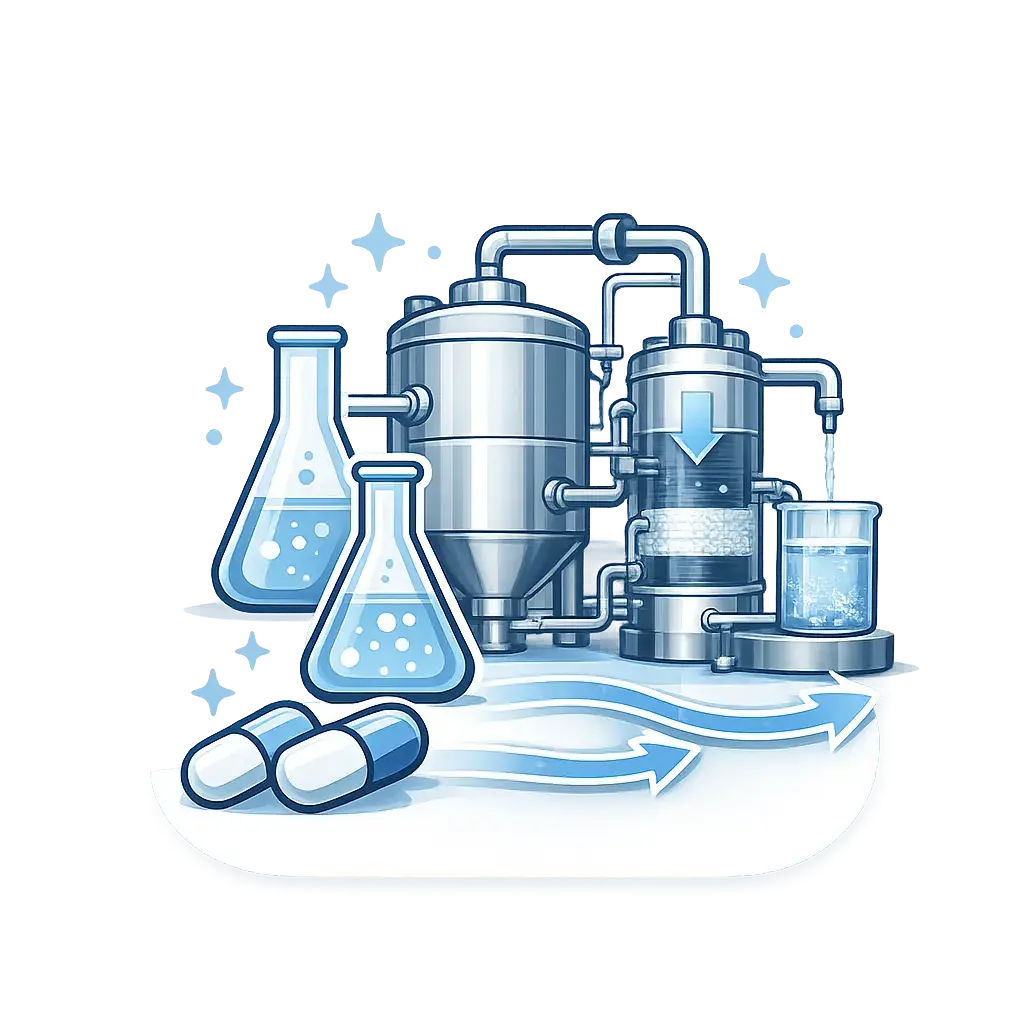
Rototech does not simply evaporate pharma wastewater. Our multi-stage approach recovers valuable solvents first, dramatically reducing COD before the evaporator — protecting equipment from fouling and preventing VOC emissions.
- Phase 1: Stripper Column thermally separates organic solvents — 50–80% COD reduction before evaporator feed.
- Phase 2: Energy-efficient MVR or MEE concentrates the stripped effluent — 85–95% volume reduction.
- Phase 3: ATFD converts the concentrate to dry, compliance-ready salt cake.
- Phase 4: Condensate polishing — recovered water reused as process water or boiler feed.
Core Technologies for Pharma:
Pharma ZLD Questions
What makes pharma effluent different from standard industrial wastewater?
Pharma API effluent contains multiple organic solvents, very high COD (20,000–2,00,000 mg/L), trace API compounds, and often requires low-temperature (vacuum) processing for heat-sensitive streams. Standard evaporators are not configured for this — Rototech designs vacuum-assisted, solvent-stripped systems specifically for pharmaceutical characteristics.
Can Rototech recover methanol, IPA, or DMF from pharma wastewater?
Yes. Stripper Columns thermally separate organic solvents from the aqueous stream before evaporation. The recovered vapour is condensed and collected for solvent recovery or safe incineration. This reduces COD on the downstream evaporator by 50–80% and prevents VOC atmospheric emissions.
Which pharma clusters in India are under CPCB ZLD mandate?
CPCB Schedule VI mandates ZLD for pharma units in Critically Polluted Areas including Ankleshwar, Panoli, Vatva (Gujarat), Badlapur, Tarapur (Maharashtra), Patancheru (Telangana), and Selaquai (Himachal Pradesh). Rototech's full ZLD train is specifically designed to meet these statutory requirements.
What quality of recovered condensate can be expected from pharma ZLD?
Post-solvent stripping and multi-effect evaporation, the condensate (recovered water) typically has COD below 300 mg/L. After a polishing step (activated carbon or ion exchange), it meets reuse standards for process utilities — cooling towers, boiler feed, or secondary process use — supporting the full closed-loop ZLD requirement.
Achieve Pharma ZLD Compliance
Share your effluent characteristics — solvent types, volumes, COD — and Rototech will engineer a CPCB Category A compliant ZLD system for your API plant.