ZLD Systems for
Solar & Semiconductor Manufacturing
Solar panel and semiconductor manufacturing consume vast quantities of ultrapure water and generate HF/acid etching effluent with trace precious metals. Rototech designs MVR and MEE ZLD systems for UPW RO reject, HF etching streams, and metallisation rinsewater — closing the water loop and recovering precious metals while meeting strict environmental consents.
Solar & Semiconductor Effluent Challenges
High-Volume UPW RO Reject
UPW systems for semiconductor fabs reject 20–30% of feed as high-TDS brine. For a fab consuming 2,000 m³/day of UPW, that's 400–600 m³/day of reject requiring ZLD treatment — a significant volume that cannot be discharged under ZLD consents.
HF & Acid Texturing Effluent
Solar cell texturing uses HF/HNO3 mixtures. Fluoride at 200–1,000 mg/L in the effluent attacks standard evaporator metallurgy and must be pre-treated to below 10 mg/L before the evaporator. Nitric acid also demands specific MOC compatibility.
Precious Metal Recovery
Silver and lead from cell metallisation steps appear in rinsewater at 5–100 mg/L. Discharging these without recovery is both an environmental violation and a direct economic loss — silver recovery from rinsewater effluent can partially offset ZLD system operating costs.
UPW Recovery. Acid Treatment. Full ZLD.
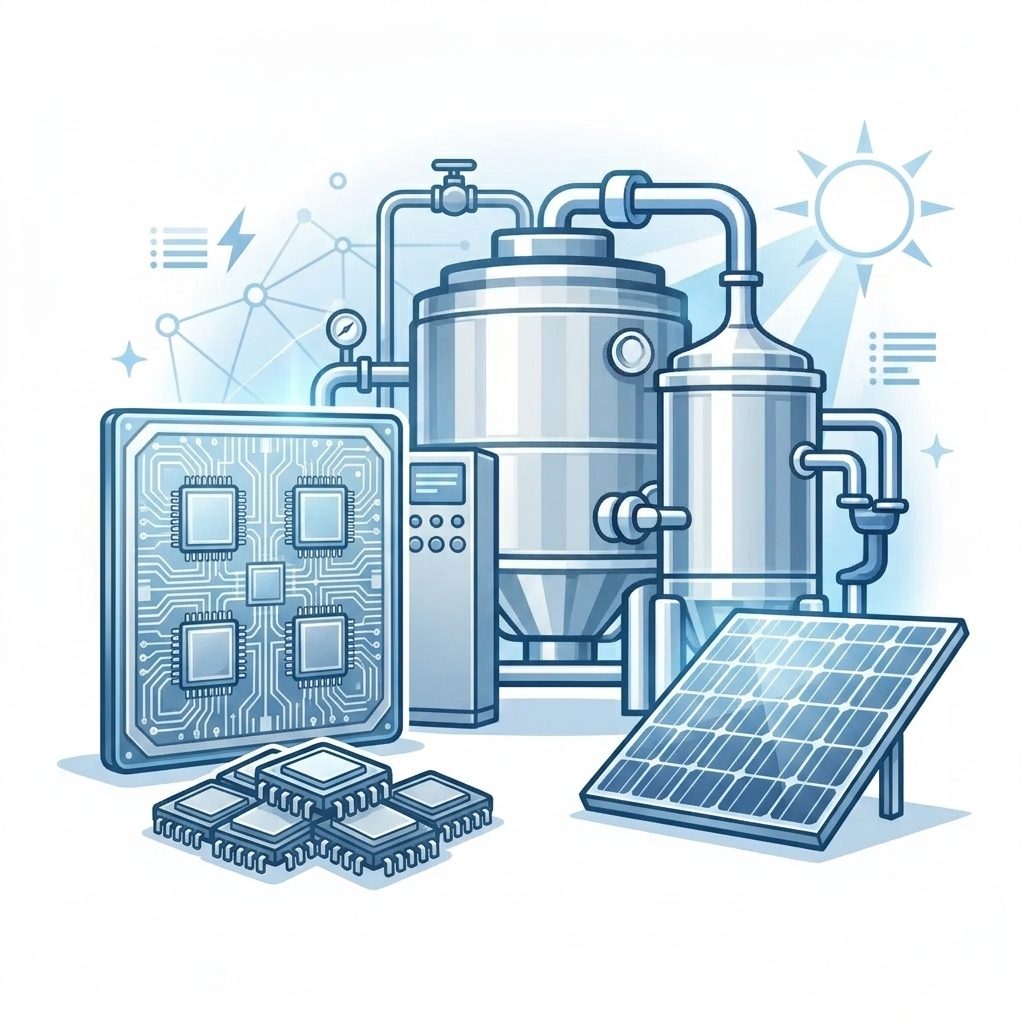
Rototech designs solar and semiconductor ZLD systems with stream segregation — treating UPW RO reject, HF etching streams, and metallisation rinsewater separately before combining for final ZLD evaporation.
- Stream 1 — UPW RO reject: MVR evaporator achieves 90–95% water recovery; condensate polished to UPW feed quality for recirculation.
- Stream 2 — HF etching: Lime defluoridation to <10 mg/L fluoride; neutralisation; fluoride-resistant evaporator (FRP/PVDF).
- Stream 3 — Metallisation rinse: Chemical precipitation recovers silver/lead; clarified stream joins main evaporator feed.
- Final stage: ATFD dries combined concentrate to dry salt cake for hazardous waste disposal.
Core Technologies for Solar & Semiconductor:
Solar & Semiconductor ZLD Questions
What are the main effluent streams in solar panel manufacturing requiring ZLD?
Three main streams: (1) UPW RO reject — high volume, moderate TDS, needs MVR for 90–95% recovery; (2) HF/HNO3 texturing effluent — fluoride up to 1,000 mg/L requiring defluoridation then fluoride-resistant evaporation; (3) silver/lead metallisation rinsewater — metal precipitation for recovery before evaporator.
How is UPW system RO reject treated for ZLD?
UPW RO reject at TDS 5,000–15,000 mg/L is relatively clean. Rototech MVR achieves 90–95% water recovery. The recovered condensate, after polishing through ion exchange or UV, meets UPW system feed quality — reducing the fab's freshwater withdrawal by the full RO reject volume and closing the water loop.
Can HF etching and nitric acid streams from solar cells be evaporated?
Yes, with mandatory pre-treatment. Lime defluoridation removes fluoride to below 10 mg/L; neutralisation adjusts pH to 6–9. The clarified stream then enters a fluoride-resistant evaporator (FRP or PVDF-lined). Without defluoridation, HF destroys standard evaporator metallurgy within weeks.
ZLD for Your Solar or Semiconductor Fab
Share your UPW consumption, acid types, and daily reject volumes. Rototech will design a complete ZLD system covering all your water streams.