ZLD Systems for
Glass Manufacturing Industry
Glass manufacturing generates effluent with extreme silica scaling potential, fluoride from etching processes, and heavy metal colorants — streams that rapidly destroy standard evaporators. Rototech engineers forced circulation ZLD systems with specialised anti-scaling design, fluoride-resistant MOC, and scheduled cleaning protocols that maintain performance across the campaign life.
Glass Industry Effluent Challenges
Severe Silica Scaling
Amorphous silica precipitates above its solubility limit (150–200 mg/L) as a hard glassy scale that blocks heat transfer surfaces. Glass wash water and cullet cooling streams have silica far above this threshold — demanding specialised anti-scaling evaporator design.
Fluoride & HF Streams
Glass etching and surface treatment uses HF acid and fluoride compounds. These attack stainless steel, copper, and most alloys — standard evaporator MOC fails rapidly. Specialised fluoride-resistant construction (FRP, PVDF, rubber-lined) is mandatory.
Heavy Metal Colorants
Cobalt (blue), selenium (red), chromium (green), and lead (crystal glass) are used as colorants. Wash water and process rinses carry these metals at 5–500 mg/L — classified as hazardous and requiring ZLD to prevent ground or surface water contamination.
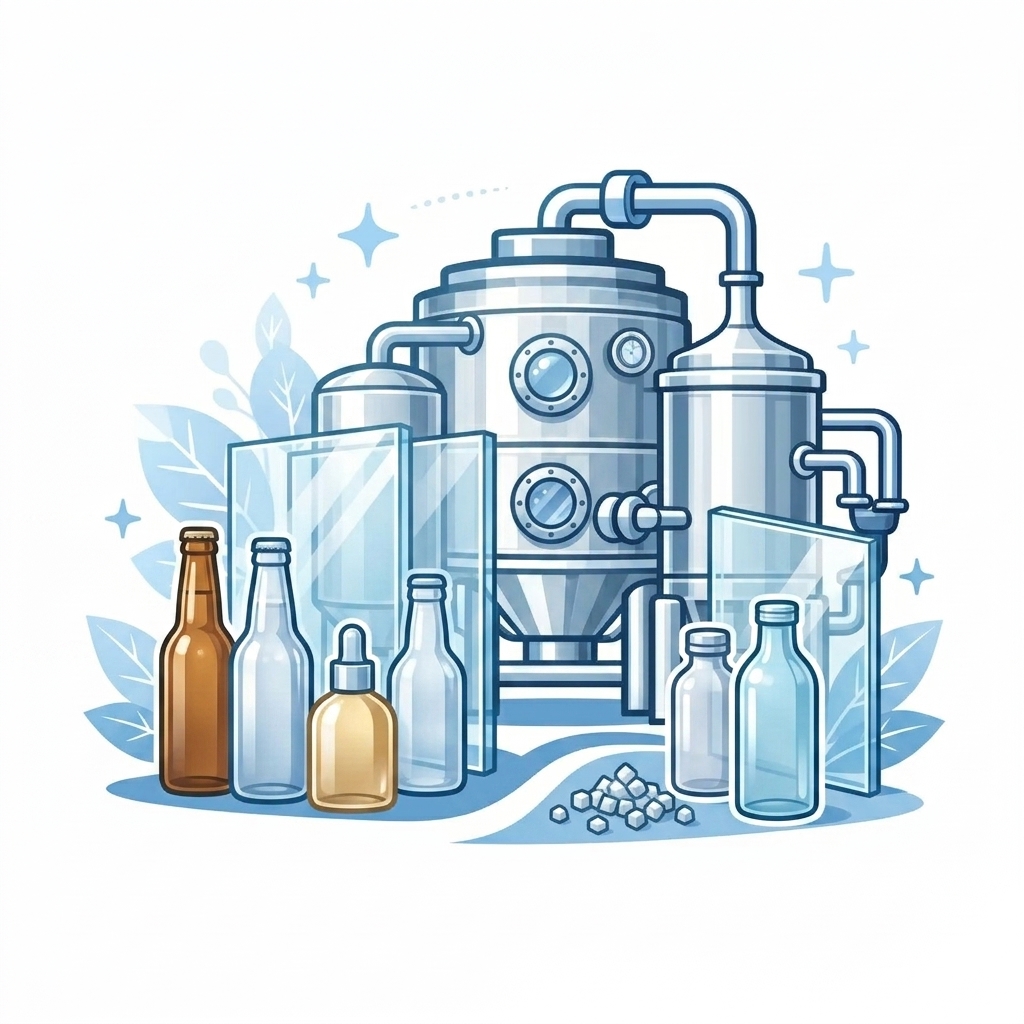
Scale-Resistant. Fluoride-Proof. Full ZLD.
Rototech glass industry ZLD systems are designed around the three dominant failure modes — silica scaling, fluoride corrosion, and metal precipitation — addressing each with specific design and materials provisions.
- Phase 1: Defluoridation pre-treatment — lime or alum precipitation removes fluoride to <10 mg/L before evaporator entry.
- Phase 2: Silica control — pH adjustment to 8–9 keeps silica soluble; scale inhibitor dosing for operating flexibility.
- Phase 3: Forced Circulation MVR or MEE — high-velocity circulation prevents silicate deposition; MOC selected for residual fluoride tolerance.
- Phase 4: ATFD dries the concentrate to dry mixed-salt cake with heavy metals immobilised for secured hazardous disposal.
Core Technologies for Glass Industry:
Glass Industry ZLD Questions
How is silica scaling managed in glass plant evaporators?
Silica forms a hard glassy scale above its solubility limit (150–200 mg/L). Rototech designs forced circulation evaporators operating below the silica saturation index, with pH control at 8–9 to keep silica soluble, and scheduled HF or HCl acid cleaning cycles to dissolve silicate deposits before they reach critical thickness.
What MOC is required for glass etching effluent with HF or fluoride?
HF attacks stainless steel, copper, and most alloys. Rototech uses FRP construction, rubber-lined carbon steel, or PVDF-lined systems for HF-bearing streams. Internal components in contact with HF above 5 mg/L use polypropylene (PP) or PVDF materials — standard metallurgy is not an option for these streams.
Can cooling tower blowdown from glass plants be included in the ZLD system?
Yes. Glass plant cooling tower blowdown has TDS of 3,000–10,000 mg/L with silica and sometimes residual chromate. Rototech designs MVR evaporators for cooling tower blowdown ZLD — typically 15–25% of cooling water make-up — achieving 90%+ water recovery and eliminating this discharge stream.
ZLD for Glass Manufacturing Without Scaling Downtime
Share your glass process streams — silica concentration, fluoride presence, cooling tower volume — and Rototech will engineer a scale-resistant ZLD system with guaranteed performance.