Foam-Controlled ZLD for
Cosmetics & Personal Care
Cosmetics and personal care manufacturing generates effluent with high surfactant loads, fragrance VOCs, emollients, and moderate COD — streams that foam uncontrollably in standard evaporators. Rototech designs foam-controlled MEE and ATFD systems specifically for personal care manufacturing plants, achieving ZLD without excessive anti-foam chemical consumption.
Cosmetics Effluent Challenges
Severe Surfactant Foaming
SLS, SLES, betaines, and other surfactants at 500–5,000 mg/L cause violent foaming during evaporation that overwhelms standard vapour separators, carries liquid into downstream equipment, and halts operations without foam-specific design provisions.
Fragrance VOC Emissions
Terpenes, esters, and alcohols from fragrance formulations are volatile. Without upstream stripping, these VOCs carry over into evaporator condensate — preventing water reuse — and may create atmospheric emission compliance issues.
Moderate COD with Recalcitrant Compounds
COD of 5,000–30,000 mg/L with poorly-biodegradable silicones, polymers, and preservatives means biological treatment cannot achieve ZLD alone. Thermal evaporation is required to concentrate and immobilise the remaining organics.
Engineered Foam Control. Clean ZLD.
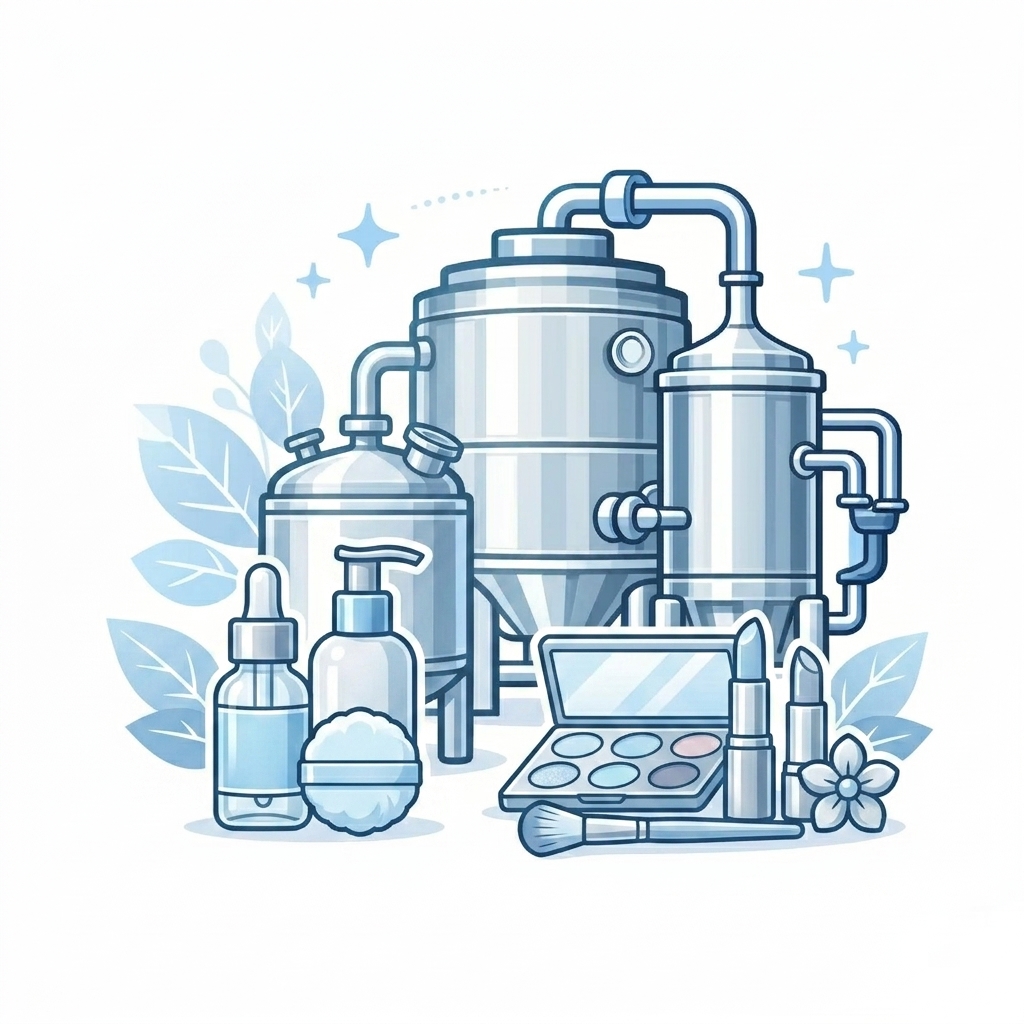
Rototech designs cosmetics ZLD systems with structural foam management built into the evaporator design — oversized separators, mechanical foam breakers, and pre-treatment VOC removal — rather than relying on anti-foam chemical overdosing.
- Phase 1: VOC stripping — removes volatile fragrance compounds before evaporator entry, protecting condensate quality.
- Phase 2: Biological pre-treatment (if required) reduces COD to acceptable evaporator feed range.
- Phase 3: Foam-controlled Falling Film or Forced Circulation MEE with oversized vapour-liquid separator and foam trap provisions.
- Phase 4: ATFD dries the concentrate to dry solid for disposal; clean condensate reused as utility water.
Core Technologies for Cosmetics:
Cosmetics ZLD Questions
How does Rototech control foaming from high-surfactant cosmetics effluent?
We design oversized vapour-liquid separators with foam traps, mechanical foam breakers, and anti-foam dosing provisions upstream. The evaporator configuration — falling film or forced circulation — is selected based on surfactant concentration and foaming propensity testing. This eliminates operational foam flooding without excessive chemical consumption.
Are fragrance VOCs removed before cosmetics effluent evaporation?
Yes — mandatory pre-treatment. Fragrance terpenes, esters, and alcohols carry over into condensate if not stripped first. Rototech designs a VOC Stripper Column upstream of the evaporator. Stripped VOCs are condensed and collected for proper disposal, protecting condensate quality for reuse and preventing atmospheric emissions.
Is biological treatment alone sufficient for cosmetics ZLD compliance?
No. Many cosmetics surfactants, silicones, and polymers are poorly biodegradable. Biological treatment can reduce COD to 2,000–5,000 mg/L, but the remaining high-TDS stream still requires thermal evaporation to achieve zero liquid discharge — biological systems alone cannot meet ZLD requirements.
ZLD for Your Cosmetics Plant Without Foam Headaches
Share your product range, effluent volumes, and surfactant types. Rototech will design a foam-controlled evaporation system that operates reliably under your production schedule.