Rinsewater Recovery & ZLD for
Metal Finishing & Electroplating
Metal finishing and electroplating plants generate dilute but highly toxic rinsewater streams containing chromium, nickel, zinc, copper, and cadmium — along with acid and alkali process baths. Rototech engineers forced circulation evaporation systems in corrosion-resistant MOC that recover plating chemicals, eliminate toxic metal discharge, and achieve ZLD compliance.
Metal Finishing Effluent Challenges
Toxic Heavy Metals
Cr6+, Ni, Zn, Cu, Cd at 50–5,000 mg/L in rinsewater — classified as hazardous under EPA hazardous waste rules. Even trace discharges trigger consent violations and risk SPCB enforcement action, plant closure, and personal liability for management.
Acid & Alkali Process Baths
Acid etching baths (H2SO4, HCl at pH 1–2) and caustic degreasing baths (NaOH at pH 12–13) cannot be fed to standard evaporators without neutralisation — and their extreme pH corrodes standard metallurgy within weeks.
Valuable Chemical Loss
Drag-out losses from plating baths carry expensive metal salts (chrome, nickel sulfate, zinc chloride) into rinsewater. Without recovery, these chemicals are permanently lost — adding to raw material costs while creating a disposal liability.
Recover Plating Chemicals. Zero Discharge.
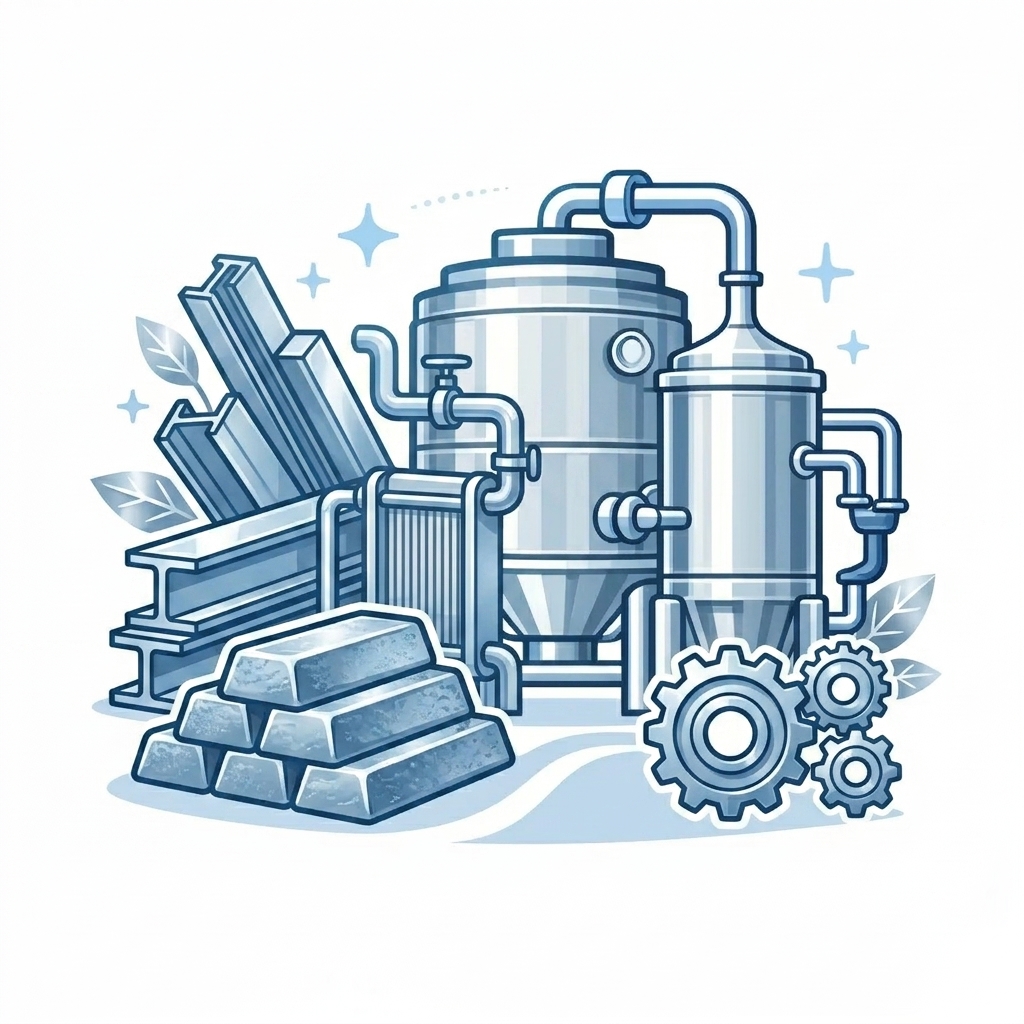
Rototech's metal finishing evaporation system concentrates dilute rinsewater back to plating bath concentration — recovering metal chemicals for reuse while producing clean condensate for rinse feed, creating a complete closed-loop system.
- Phase 1: Stream segregation — chrome, nickel, acid, and alkali streams collected separately to prevent cross-contamination and enable targeted recovery.
- Phase 2: Neutralisation + chemical precipitation to remove bulk metals and adjust pH for evaporator feed.
- Phase 3: Forced Circulation Evaporator in Titanium/Hastelloy — concentrates rinsewater for return to plating bath or volume reduction.
- Phase 4: ATFD dries the final concentrate to dry metal salt cake for secured hazardous waste disposal.
Core Technologies for Metal & Electroplating:
Metal Finishing ZLD Questions
Can evaporators concentrate chrome or nickel electroplating rinsewater?
Yes. Rototech designs forced circulation evaporators in Titanium or Hastelloy C-276 for chrome and nickel rinsewater. The evaporator concentrates dilute rinsewater (50–500 mg/L metal) to a bath-strength solution (5,000–50,000 mg/L) returned directly to the plating tank — recovering chemicals and eliminating metal discharge simultaneously.
How are acid etching and alkali degreasing baths treated before evaporation?
Acid (pH 1–2) and alkali (pH 12–13) streams are collected separately and neutralised to pH 6–9. Heavy metals are chemically precipitated and filtered. The clarified neutral effluent then feeds the evaporator — specified in appropriate MOC (SS316L, Titanium) for residual trace metal compatibility.
Can rinsewater be recycled back to the plating bath after concentration?
Yes — this is the primary economic benefit. The concentrated metal solution returns to the plating bath, recovering 80–95% of drag-out chemicals. The clean condensate is reused as rinse feed, creating a closed loop that eliminates both metal discharge and freshwater consumption — paying back the investment through chemical savings.
Recover Metals. Achieve ZLD Compliance.
Share your plating bath types, rinsewater volumes, and metal concentrations. Rototech will design a closed-loop recovery and ZLD system for your finishing plant.