Wash Water Recovery & ZLD for
Plastic Recycling Industry
Plastic washing and recycling plants produce highly polluted wash water containing microplastics, detergents, inks, and organic residues — streams that foam violently in standard evaporators. Rototech delivers foam-controlled forced circulation evaporation systems to recover wash water for reuse and achieve zero liquid discharge, making recycling operations more economically and environmentally sustainable.
Plastic Recycling Wash Water Challenges
Microplastics & Suspended Solids
Fine plastic particles (1 µm–5 mm) and ink residues from label washing foul heat transfer surfaces and block instrumentation in standard evaporators. Dedicated settling pre-treatment is required before any evaporation system.
Detergent Foaming
Wash chemicals (NaOH, detergents, wetting agents) at 200–2,000 mg/L cause violent surfactant foaming in standard evaporators — foam floods vapour separators, damages compressors, and trips the plant. Standard evaporator designs cannot handle this without specific foam management provisions.
High Wash Water Consumption
Intensive washing of post-consumer plastics (PET, HDPE, PP) consumes 3–8 m³ of water per tonne of plastic processed. Without closed-loop water recovery, freshwater costs alone can make recycled plastic economically uncompetitive versus virgin material.
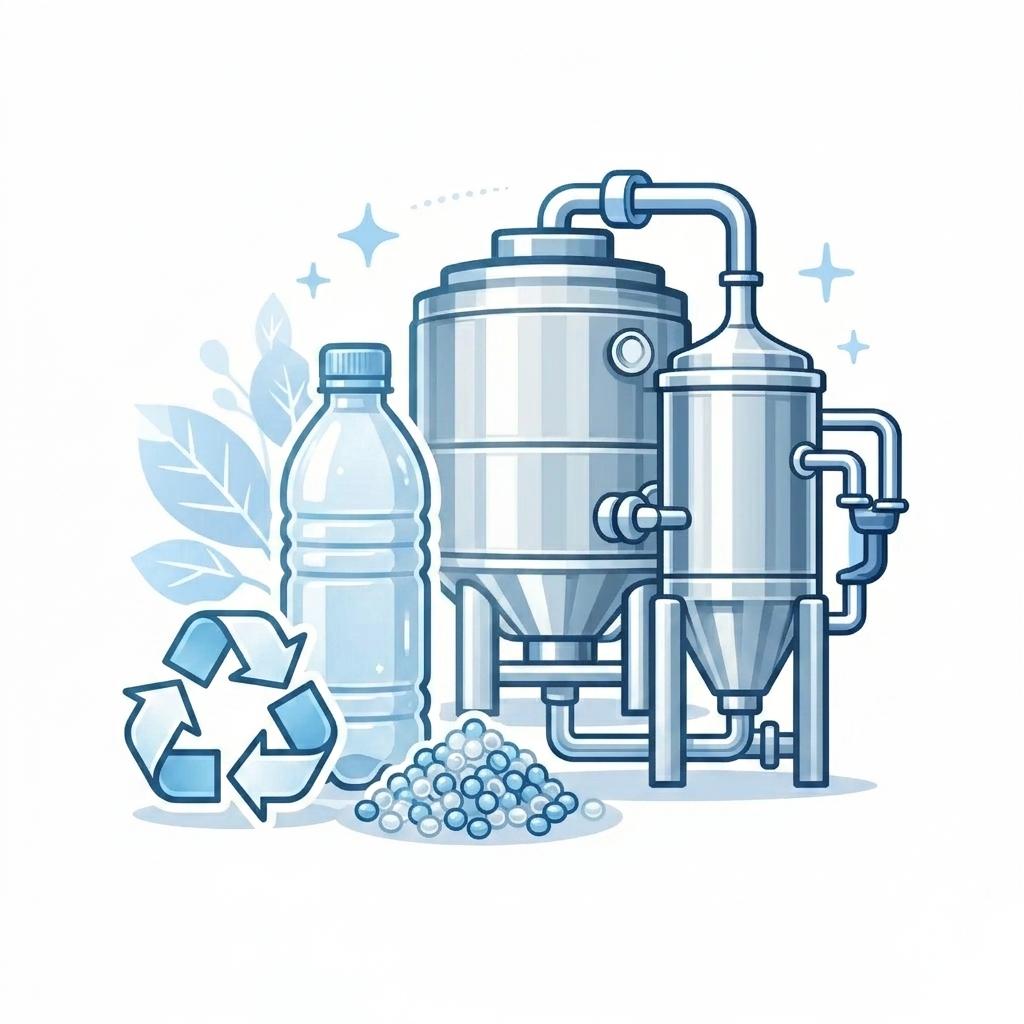
Recover Wash Water. Close the Loop.
Rototech integrates microplastic pre-treatment with foam-controlled evaporation to convert dirty wash water into clean distillate reusable directly in the washing lines — eliminating freshwater purchase costs while achieving ZLD compliance.
- Phase 1: Settling + coarse filtration — removes microplastics and suspended solids below 200 mg/L before evaporator entry.
- Phase 2: Foam-controlled Forced Circulation or MEE — oversized vapour separator with foam breaker; handles surfactant-rich feed without foam flooding.
- Phase 3: Recovered condensate is clean, microplastic-free, and reusable directly in washing lines after minimal polishing.
- Phase 4: ATFD dries the concentrated sludge to dry solid — microplastics and dissolved solids immobilised for disposal.
Core Technologies for Plastic Recycling:
Plastic Recycling ZLD Questions
How does Rototech handle microplastics in plastic wash water evaporation?
Microplastics concentrate in the evaporator and block heat transfer surfaces. Rototech designs settling + coarse filtration pre-treatment to reduce suspended solids below 200 mg/L before evaporator entry. Forced circulation configurations manage residual fines with slurry recirculation, preventing surface fouling while maintaining heat transfer efficiency.
Can plastic wash water be fully recovered for reuse in the washing lines?
Yes. The evaporator condenses clean water vapour — the recovered condensate is free of microplastics, surfactants, and dissolved contaminants. After sand filter + activated carbon polishing, it is returned directly to the washing lines. This closed loop eliminates freshwater intake for washing, reducing operating cost by 80–90% of current water purchase.
What evaporator configuration handles foaming from plastic wash water detergents?
Surfactants at 200–2,000 mg/L cause severe foaming in standard falling film evaporators. Rototech uses forced circulation or modified falling film configurations with oversized vapour-liquid separators, mechanical foam breakers, and structured anti-foam injection points — preventing foam carryover into the compressor or condenser without excessive anti-foam chemical costs.
Recover Wash Water & Achieve ZLD for Your Recycling Plant
Share your plastic types, washing volumes, and detergent usage. Rototech will design a foam-controlled closed-loop water recovery system for your recycling operation.